



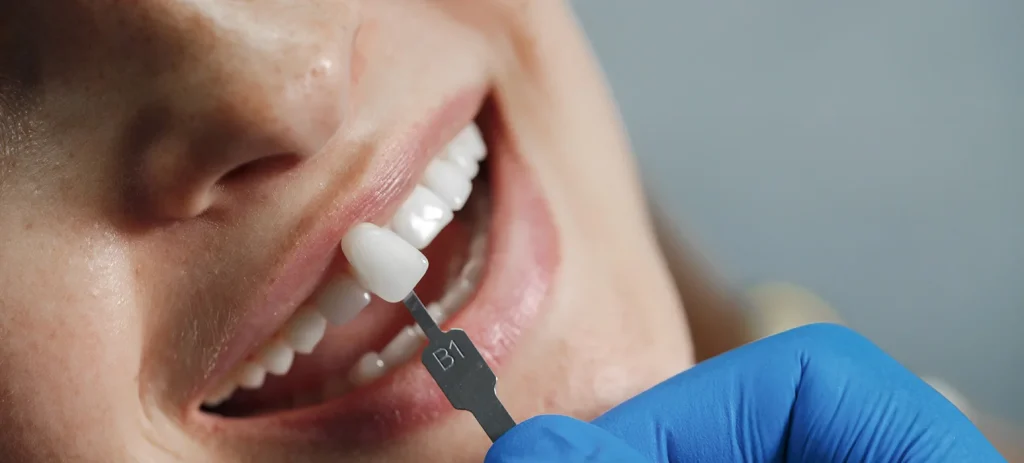
Dental veneers in Turkey are thin custom-made shells, usually porcelain (such as E-max), zirconia or composite, bonded to the front of the teeth to improve their shape, colour and alignment. At Dent Plus Clinic in Istanbul, porcelain veneers typically need two visits within about 5–7 days, while composite veneers can often be done in 1–2 days.
What are dental veneers and what can they fix?
A veneer is a thin layer of tooth-coloured material that covers the visible front surface of a tooth. According to the American Dental Association (ADA), veneers are used to improve the appearance of teeth, for example when they are discoloured, chipped, worn or slightly uneven.
Veneers are often chosen to correct:
- Stains that do not respond well to teeth whitening.
- Small chips, cracks or worn edges.
- Gaps between front teeth.
- Teeth that are slightly crooked, short or uneven in shape.
Veneers are a cosmetic treatment. They do not fix severe crowding, bite problems or gum disease, which need to be treated first. When many teeth are treated together to redesign the smile, the result is often called a Hollywood smile.
Which veneer material is right for me: E-max, zirconia or composite?
Porcelain veneers (E-max / lithium disilicate)
E-max is a type of glass-ceramic known for its translucency, which means it lets light through in a way that looks very similar to natural enamel. It is a popular choice for front teeth when a natural look is the priority. Porcelain resists staining well and, with good care, typically lasts around 10–15 years or longer.
Zirconia veneers
Zirconia is very strong and slightly more opaque than E-max. This can help to mask very dark teeth or metal underneath, and it may be considered for patients with strong bite forces. Modern layered or high-translucency zirconia can look natural, but the dentist will choose carefully for the most visible teeth.
Composite veneers
Composite veneers are made of tooth-coloured resin and shaped directly on the tooth, often in a single visit. They usually need little or no removal of enamel and are easier to repair. However, they tend to stain and wear faster than porcelain, and typically last around 4–8 years before needing polishing, repair or replacement.
| Feature | Porcelain / E-max | Zirconia | Composite |
|---|---|---|---|
| Look | Very natural, translucent | Natural, slightly more opaque | Good, can lose shine over time |
| Strength | High | Very high | Moderate |
| Stain resistance | Very good | Very good | Lower, can stain |
| Enamel removal | Usually minimal (thin layer) | Usually minimal to moderate | Little or none |
| Typical lifespan with good care | About 10–15+ years | About 10–15+ years | About 4–8 years |
| Visits in Istanbul | 2 visits, about 5–7 days | 2 visits, about 5–7 days | Often 1–2 days |
| Repairable | Usually replaced if broken | Usually replaced if broken | Easy to repair |
These figures are general ranges. The real lifespan depends on your bite, habits such as grinding, and how well you look after your teeth.
Veneers vs crowns: which one do I need?
Veneers and crowns are often confused, but they work differently.
- A veneer covers only the front surface of the tooth. It needs a healthy tooth with enough enamel, and usually involves removing a thin layer of enamel.
- A crown covers the whole tooth like a cap. It is generally recommended when a tooth is heavily filled, broken, weakened after a root canal treatment, or badly worn.
Many smile makeovers combine both: veneers on healthy front teeth and crowns on teeth that need more protection. You can learn more in our article on dental crowns. If a tooth needs a root canal first, our endodontics team will treat it before any cosmetic work.
How does the veneer process work in Istanbul, step by step?
- Free online consultation. Send photos of your smile following our 8-step photo guide, plus any recent X-rays. You receive a personal treatment plan with the suggested material and number of teeth.
- First visit: examination and smile design. The dentist checks your teeth, gums and bite, takes X-rays if needed, and discusses the shape and shade you want. A preview or mock-up may be used.
- Tooth preparation. For porcelain or zirconia veneers, a thin layer of enamel is usually removed under local anaesthesia. Impressions or digital scans are taken and temporary veneers may be fitted.
- Laboratory work. The veneers are made to your design over a few days. You can enjoy Istanbul in the meantime.
- Try-in and bonding. The dentist checks the fit, colour and bite, then bonds the veneers permanently.
- Final check. A short follow-up visit before you fly home allows small adjustments to your bite.
For composite veneers, steps 3 to 5 are combined: the resin is shaped and hardened directly on your teeth.
How many veneers do I need, and what about my gums?
Number of teeth
Some people need only one or two veneers to fix a chipped or stained tooth. Others choose 6–10 veneers on the upper teeth, and sometimes the lower teeth too, to create a balanced smile. The number depends on how wide your smile is and which teeth show when you talk and laugh.
Gum line and gummy smile
Healthy, even gums are an important frame for veneers. If your gums show a lot when you smile, or are uneven, the dentist may suggest gum contouring first. See our gummy smile treatment for more details.
Are veneers permanent and are there any risks?
Porcelain and zirconia veneers are usually considered an irreversible treatment, because enamel removed during preparation does not grow back. If a veneer is removed later, the tooth will normally need a new veneer or a crown.
Possible issues include:
- Temporary sensitivity to hot or cold after preparation.
- Chipping or debonding, especially with grinding or biting hard objects.
- Gum irritation if cleaning around the edges is poor.
- A colour that no longer matches if other teeth are whitened later. This is why whitening is usually done before veneers.
A careful examination, a conservative preparation and good aftercare help to reduce these risks, but no dental treatment can be guaranteed.
How do I care for veneers after I go home?
- Brush twice a day with a non-abrasive toothpaste and clean between teeth daily.
- Avoid biting nails, pens, ice or opening packages with your teeth.
- Wear a night guard if you grind your teeth and your dentist recommends one.
- Limit coffee, tea, red wine and smoking, especially with composite veneers.
- See a dentist for check-ups and cleaning, usually every 6–12 months.
After you return home, you can send photos to the clinic on WhatsApp if you have any questions.
Why choose Dent Plus Clinic for veneers in Istanbul?
- A team with more than 15 years of experience, under the clinical supervision of Dr. Abdurrahman Öztürk, dentist.
- A central location in Gümüşsuyu, Beyoğlu, close to Taksim Square.
- A free online consultation, so you know the plan before you travel.
- Direct WhatsApp contact on +90 534 445 94 44 or email at info@dentplusclinic.com.
Explore all our cosmetic dentistry treatments to see how veneers can be combined with other options.
FAQ about dental veneers in Turkey
How long do I need to stay in Istanbul for veneers?
For porcelain or zirconia veneers, usually about 5–7 days with two main visits. Composite veneers often take 1–2 days.
Do veneers damage natural teeth?
Porcelain veneers usually need a thin layer of enamel to be removed. Done carefully, the tooth stays healthy, but the change is not reversible.
Can I whiten veneers?
No. Whitening products do not change the colour of porcelain or zirconia, so any whitening of natural teeth should be done before veneers.
Are E-max veneers better than zirconia?
Neither is better for everyone. E-max is often chosen for translucency on front teeth; zirconia for strength or to cover dark teeth.
Is the procedure painful?
Preparation is done under local anaesthesia. Mild sensitivity for a few days afterwards is common and usually settles on its own.
Can I get veneers if I have crooked teeth?
Mild crookedness can often be masked with veneers. More significant crowding or bite problems may need orthodontic treatment first.
Video coming soon: A short side-by-side look at E-max, zirconia and composite veneers, showing how each material looks in a real smile.
Medically reviewed by: Dr. Abdurrahman Öztürk, dentist — Dent Plus Clinic, Istanbul. Last updated: November 2026.